


29 Jul 2026
By: Rafaela Kava
Propionate: The Forgotten Driver of Dairy Performance
Propionate: The Forgotten Driver of Dairy Performance
How rumen biology, glucose metabolism and marine bioactives influence milk production.
For many years, dairy nutrition has focused on increasing dry matter intake, improving fibre digestibility and maximising milk yield.
Today, advances in rumen microbiology are shifting the focus towards improving how efficiently the rumen converts nutrients into usable metabolic energy.
Why Propionate Matters
Propionate is the principal gluconeogenic precursor in dairy cows. Although it represents only 20–30% of total ruminal volatile fatty acids (VFAs), it is the principal substrate supporting hepatic glucose production.
Supporting propionate production is therefore not simply about altering rumen fermentation — it is about improving the efficiency with which nutrients are converted into milk.
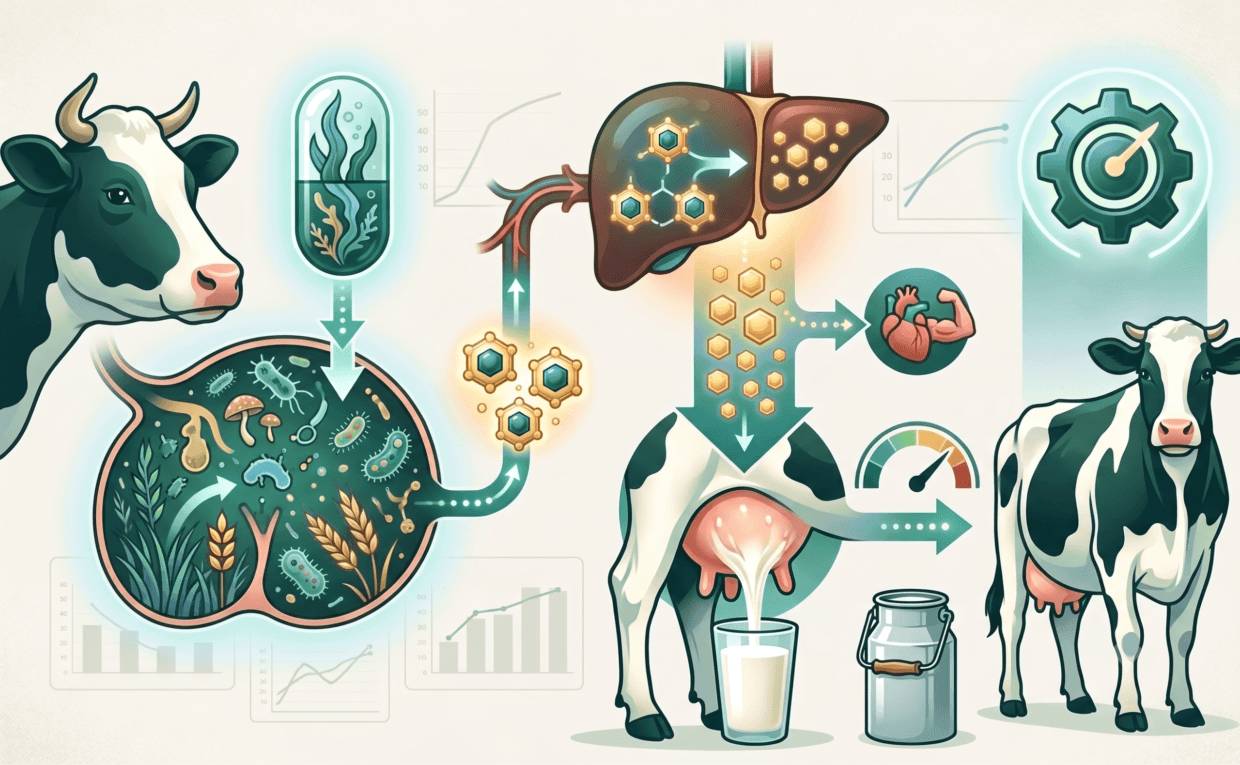
with a central role in glucose production
Why Glucose Is the Real Currency of Milk Production
Unlike monogastric animals, dairy cows absorb very little glucose directly from their diet. Instead, dietary starches, sugars and structural carbohydrates are fermented by rumen microorganisms into volatile fatty acids.
Acetate
Primary precursor for milk fat synthesis.
Butyrate
Supports rumen epithelial development and provides energy for rumen tissue.
Propionate
Transported to the liver, where it becomes the principal substrate for gluconeogenesis.
The glucose produced is essential for numerous physiological processes, including immune responses, brain function and fetal development. During lactation, however, its greatest demand is for lactose synthesis.
Lactose determines milk volume.
It regulates osmotic pressure within the mammary gland, drawing water into milk. Because glucose is required for lactose synthesis, propionate production is a key factor supporting milk production, especially during early lactation.
The Acetate-to-Propionate Ratio
Rumen fermentation is defined not only by the concentration of individual VFAs but also by the balance between them.
A lower A:P ratio generally indicates a greater proportion of fermentation directed towards propionate production, increasing the availability of glucogenic substrates for the liver.
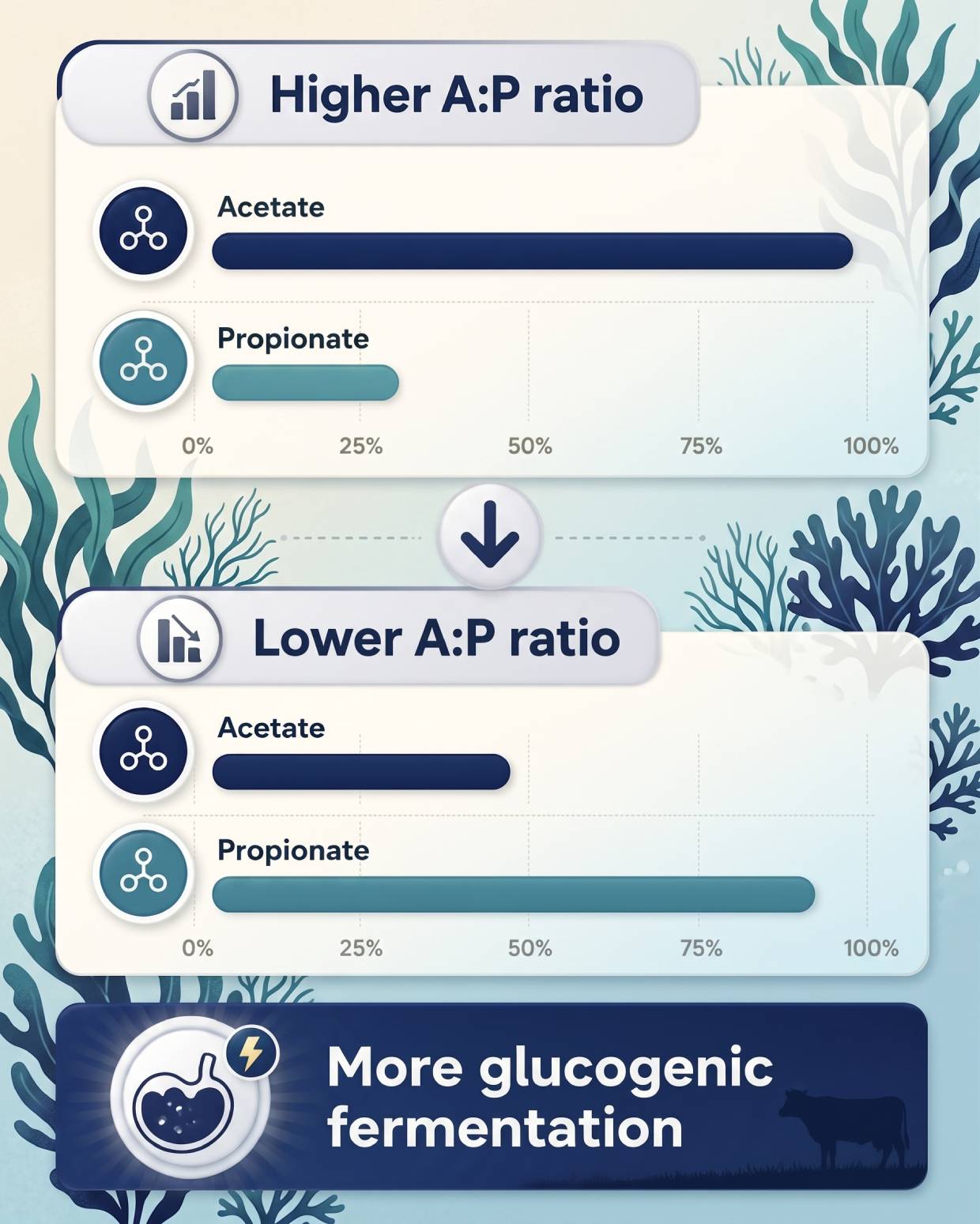
A lower A:P ratio does not mean acetate is undesirable. The goal is to maintain a balanced rumen ecosystem that efficiently produces all three major VFAs according to the cow’s physiological needs.
Beyond Fermentation: Why the Rumen Microbiome Matters
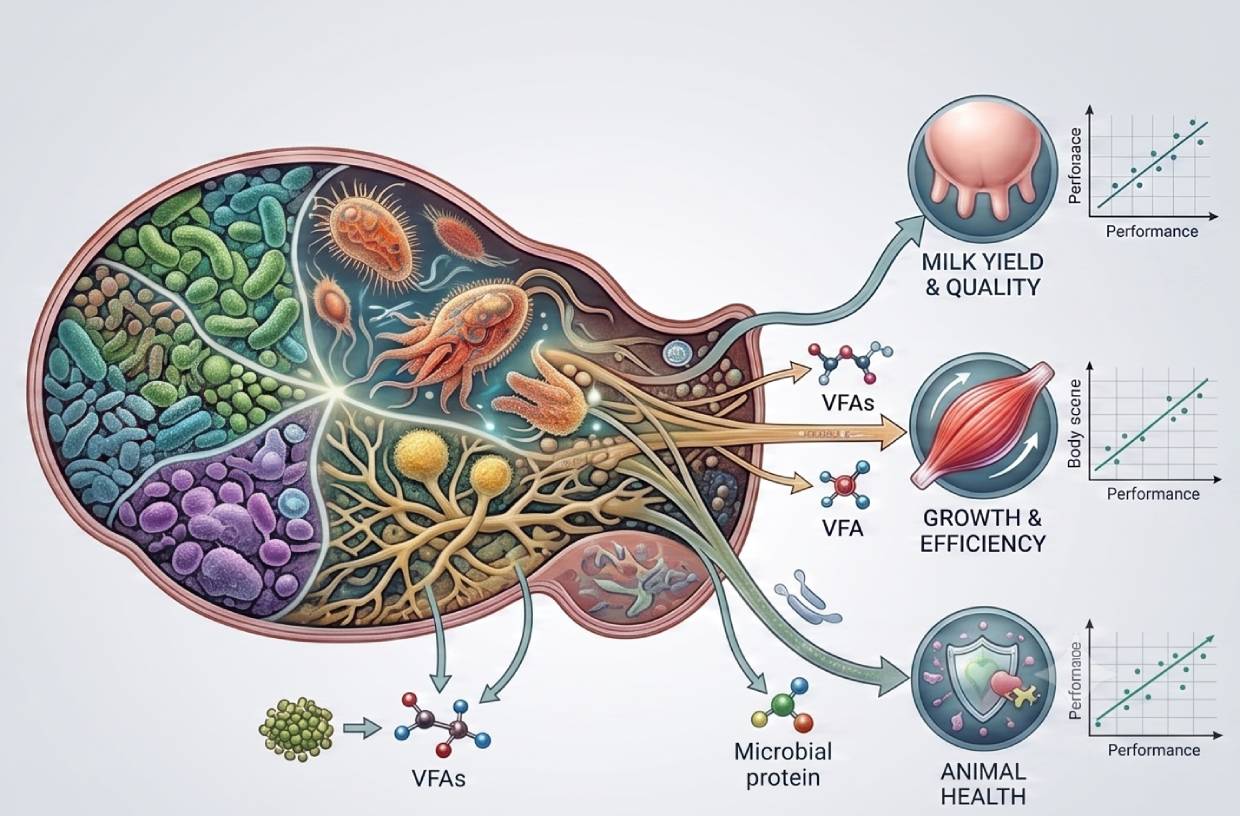
The rumen contains trillions of bacteria, protozoa, fungi and archaea that function as a highly complex microbial ecosystem.
Rather than viewing the rumen simply as a fermentation vat, modern research recognises it as a dynamic biological system whose function influences nutrient utilisation, fermentation efficiency and animal performance.
Why Seaweed Is Attracting Attention in Dairy Nutrition
Marine macroalgae are fundamentally different from conventional feed ingredients. Rather than supplying energy or protein, they provide a naturally diverse matrix of bioactive compounds capable of interacting with rumen biology through multiple complementary pathways.
Whole-seaweed ingredients contain a broad spectrum of naturally occurring compounds, including:
Laminarin, fucoidan, ulvan and alginate.
Including phlorotannins.
Carotenoids and chlorophyll-derived compounds.
Including betaine.
Unlike purified extracts that isolate individual compounds, whole-seaweed ingredients retain this natural complexity, allowing multiple bioactive compounds to interact simultaneously within the rumen ecosystem. This multi-bioactive approach is attracting increasing interest as nutritionists seek strategies that support rumen function through multiple complementary mechanisms.
How Marine Bioactives May Influence Propionate Production
Marine bioactives influence the biological processes underlying fermentation rather than simply stimulating it.
with a naturally diverse profile
of marine bioactive compounds
OceanFeed™: From Rumen Biology to Commercial Performance
OceanFeed™ Ruminants combines carefully selected brown, red and green macroalgae to provide a naturally diverse profile of marine bioactive compounds.
Wageningen Research Study
In a controlled study conducted by Wageningen Livestock Research, supplementation with OceanFeed™ was associated with measurable changes in rumen fermentation.
Shift towards a more glucogenic fermentation profile, consistent with increased availability of substrates for hepatic glucose synthesis.
From Biological Response to Production Benefits
Under commercial conditions, these biological responses translated into significant production benefits.
These observations suggest that OceanFeed™ may provide particular value during periods of increased metabolic challenge, when efficient nutrient utilisation becomes increasingly important.
Looking Beyond Methane
Focusing solely on methane risks overlooking the broader biological processes that determine performance.
Traditional focus
- Methane reduction
- Emissions
- Carbon loss
- Sustainability
Broader biological approach
- Efficient fermentation
- Nutrient utilisation
- Glucogenic energy
- Productivity + sustainability
Supporting a rumen environment that favours efficient fermentation and greater propionate production can deliver benefits that extend beyond emissions alone.
The Future of Dairy Nutrition Is Biological
The next generation of dairy nutrition will focus not only on supplying nutrients but also on supporting the biological systems that convert them into productive performance.
At the centre of this shift is propionate, one of the most important — yet often overlooked — drivers of dairy performance. As research into marine bioactives continues to expand, whole-seaweed solutions such as OceanFeed™ illustrate how supporting rumen biology may help improve production efficiency under commercial conditions.
